What AI Can Do for Your Life Outside of Work
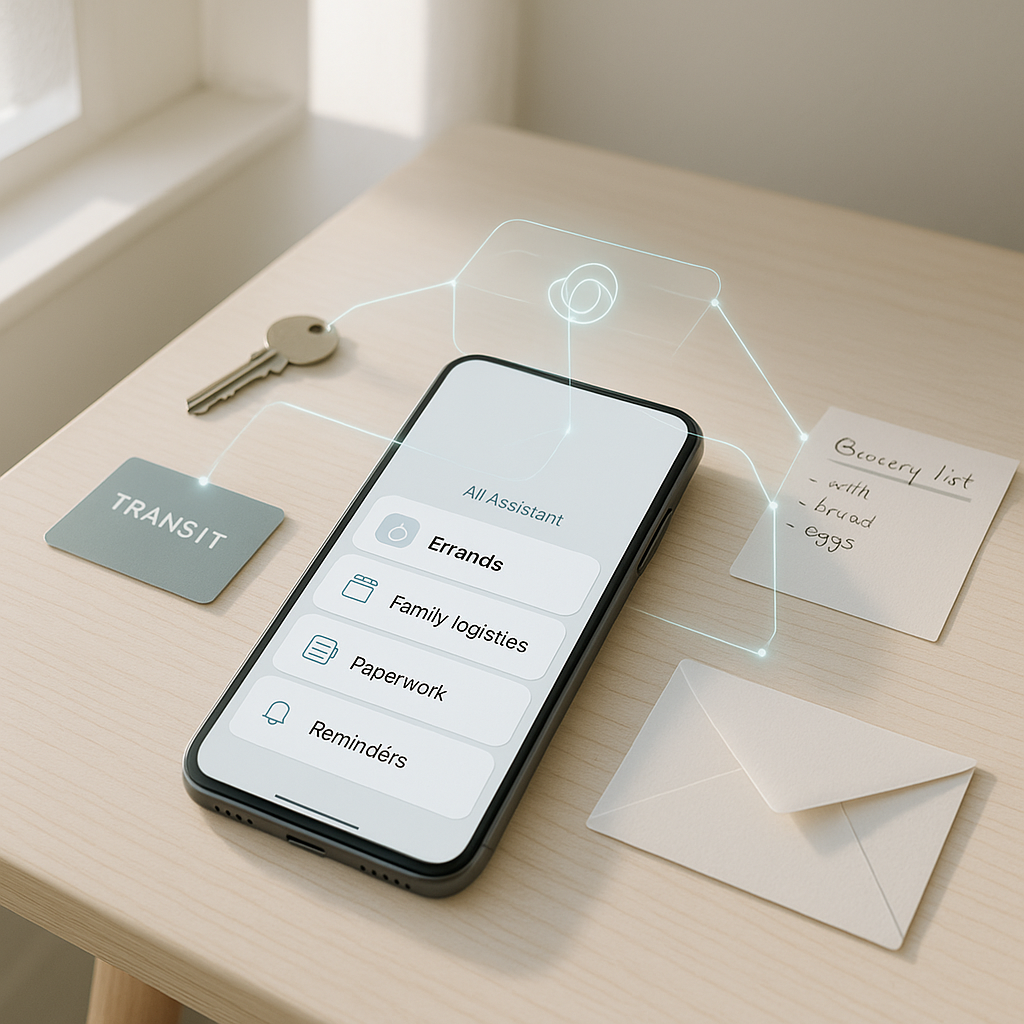
Most conversations about AI still start at work: faster writing, better meetings, cleaner research, quicker reporting. That makes sense. Work is where many people first feel the pain of repetitive tasks.
But one of the most interesting changes happening right now is that AI is becoming useful in the rest of life too. Not in a science-fiction sense. Not as a robot that runs your household. More like a layer that helps you think, sort, plan, summarize, and follow through when life gets noisy.
That matters because a lot of non-work stress is really coordination stress. It is remembering what needs to happen, finding the next step, comparing options, translating long documents into plain English, and keeping a dozen small commitments from slipping through the cracks.
Pew Research has found that public attention to AI in everyday life is rising quickly, but comfort still lags adoption. In other words, people increasingly expect AI to show up in daily life, while still wanting more control over how it is used. That tension is healthy. It suggests the best personal uses of AI will not be the flashiest ones. They will be the ones that reduce friction without taking agency away.
A good personal AI setup usually starts with organization. You can use an AI assistant as an intake layer for all the loose inputs you collect through the week: errands, half-formed ideas, family logistics, bills to question, forms to fill out, meal ideas, packing lists, follow-ups, and things you do not want to keep carrying in your head. The first win is often not automation. It is simply getting life out of mental RAM and into a system that can be reviewed and acted on.
From there, planning gets easier. AI can turn a messy list into categories, prioritize urgent items, separate quick wins from deep tasks, and suggest the next three actions instead of handing you a long, guilty spreadsheet of everything at once. If you are coordinating a move, planning a trip, helping your parents with paperwork, or trying to get your home life more organized, that kind of structure is often more valuable than a clever one-off answer.
Reminders and recurring tasks are another strong use case. OpenAI now supports scheduled tasks in ChatGPT, which is a good signal that personal AI is moving from one-time chats into ongoing follow-through. That matters because many life-admin problems are not knowledge problems. They are remembering problems. Refill this prescription. Check in on that insurance claim. Reorder the dog food. Review the school calendar. If AI can help turn intentions into reliable prompts at the right moment, it becomes much more practical.
Paperwork is another major area. Many people spend a surprising amount of time parsing medical instructions, lease terms, school emails, benefits documents, travel policies, return rules, or long customer-service threads. Apple now positions Apple Intelligence Writing Tools around rewriting, proofreading, and summarizing text nearly anywhere you can type. That kind of capability is not just useful for work writing. It is useful when real life hands you something long, confusing, or emotionally draining and you need a calmer first pass.
Household decision-making is another place AI can help. Meal planning is a good example. An assistant can generate a realistic week of meals from what is already in the fridge, turn it into a shopping list, adjust for budget or dietary constraints, and then save the plan in a reusable format. The same pattern works for travel planning, birthday logistics, camp packing, moving checklists, and comparison shopping. The point is not that AI knows your life better than you do. The point is that it can reduce the startup cost of getting organized.
There is also a growing category of AI tools that can take action with your permission. OpenAI's task and agent features point toward a future where an assistant does not just draft the reminder or suggest the list, but helps carry the process forward. Used carefully, that could be meaningful for personal admin: booking routine appointments, monitoring recurring needs, or surfacing the next action before a task becomes urgent. The caution, of course, is that more action requires more trust. Personal AI works best when approvals, boundaries, and review points are explicit.
None of this means everyone needs a complicated stack. In fact, the opposite is usually true. The best personal setup is often simple: one main assistant, one place where tasks land, one notes system, and a few repeatable prompts or automations for the categories of life that create the most drag. If you can reduce decision fatigue around planning, reminders, paperwork, and household coordination, AI starts to feel less like a novelty and more like support.
The deeper opportunity is not doing more. It is carrying less. Personal AI is most valuable when it helps you recover attention, lower background stress, and make ordinary life easier to run. That is a different promise than workplace productivity, but for many people it may turn out to be the more important one.
If that is where AI is heading for individuals, the right question is not, “What is the coolest thing it can do?” The better question is, “What part of life do I keep re-organizing by hand?” Start there, and AI becomes much easier to use well.