Turn a Discovery Call Into a Clearer AI Roadmap
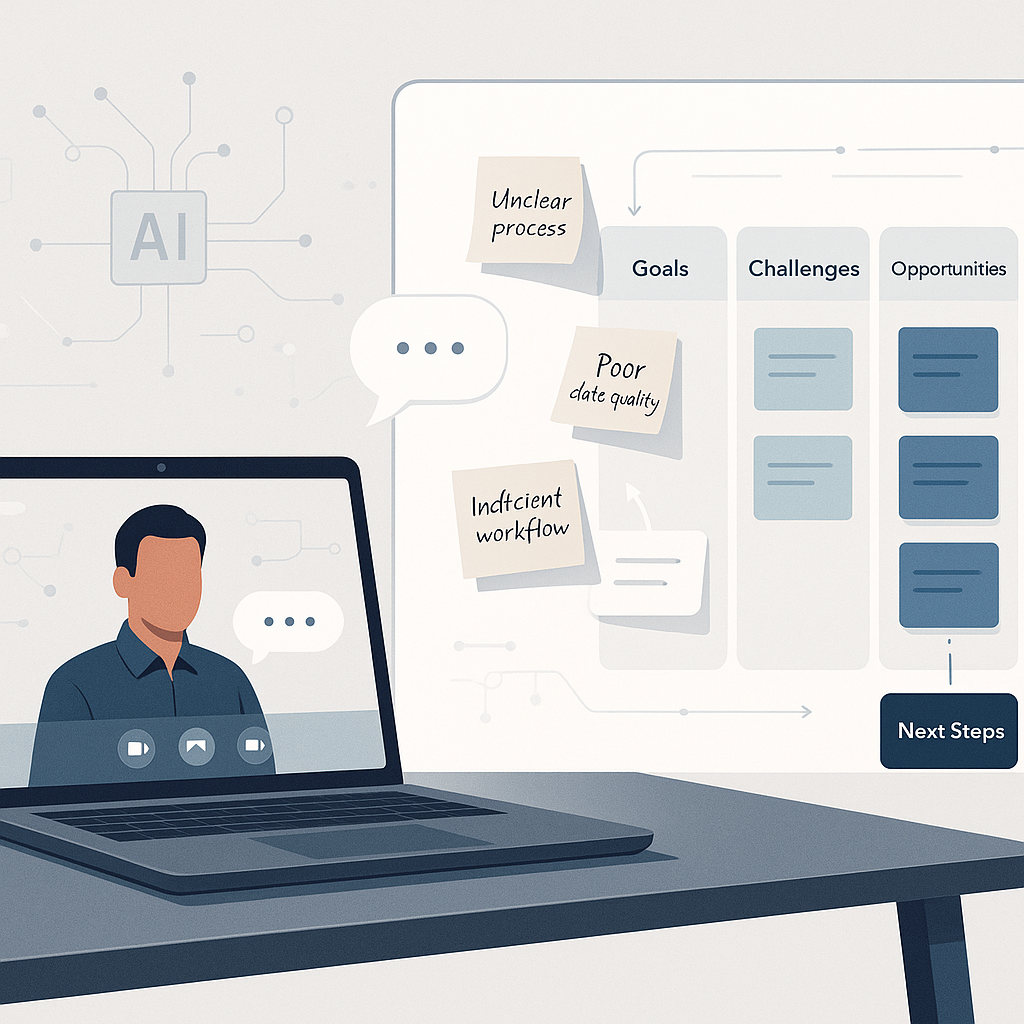
A lot of AI projects start slipping before implementation even begins.
Usually, the issue is not the model or the software. It is the discovery call. A business owner mentions slow follow-up, scattered customer notes, missed handoffs, and too much manual admin. Then the next conversation jumps straight to tools.
That is how teams end up discussing chatbots, automations, or CRM add-ons before anyone has defined what is actually broken.
Treat the discovery call like project input, not a sales step
A discovery call should produce something useful on its own. It should give you a raw record of how work actually happens: where calls get missed, where estimates stall, where inboxes become personal task lists, where CRM records stay incomplete, and where nobody is sure who owns the next step.
If you record the call and analyze it carefully, AI can help turn that messy conversation into a structured problem map.
The point is not to hand back a polished transcript summary. The point is to extract operating issues the team can make decisions on.
That usually includes:
- repeated bottlenecks
- unclear ownership between people or departments
- missing SOPs or inconsistent handoffs
- manual follow-up work across email, calendar, and CRM
- customer communication gaps
- reports that take too long to compile
- review loops that create delays or rework
Use AI to sort the problems, not sell the answer
This is where AI is useful early in an engagement. It can help sort one conversation into patterns.
For example, a discovery call may sound like a general complaint about being "too busy." But the real issues underneath might be more specific:
- inbound calls are not logged consistently
- estimate requests sit in a shared inbox for days
- appointment scheduling depends on one person checking calendars manually
- invoices go out late because approvals happen over text and email
- customer notes live in multiple places, so follow-up is inconsistent
Those are roadmap inputs. They are easier to prioritize because they point to work, not vague intentions.
Better discovery makes scope clearer
Loose discovery creates loose proposals. You get broad promises about efficiency, automation, or better systems, but no clear tie to the business problem.
Structured discovery gives you something more useful:
- the few workflow failures causing the most waste
- what kind of fix each issue needs
- what should be handled first
- what should wait
That matters when you are scoping work for a small business or internal ops team. Not every problem needs software. Some need a process change. Some need cleaner ownership. Some need a form, a checklist, or a better intake step before automation makes sense.
A clearer roadmap helps separate those cases.
Ask for friction in day-to-day work
Good discovery questions stay close to actual operations.
Ask things like:
- Where does work stall?
- What gets entered twice?
- What falls through between the call, the estimate, and the follow-up?
- Where are people stitching together information manually?
- Which reports, tickets, or approvals depend on one person remembering the next step?
- Where is the business paying for confusion, delays, or rework?
These questions tend to surface the problems that matter: missed handoffs, unclear next actions, duplicate admin, and inconsistent communication.
Once those are visible, AI can help group them, label them, and sequence them into a plan.
What a useful roadmap should produce
After the call, the output should be more than notes. It should help the team decide what to improve, automate, or ignore.
A practical roadmap might include:
- the top 3 to 5 operating problems mentioned in the call
- the workflows involved in each problem
- the systems touched, such as inboxes, calendars, CRM records, estimates, invoices, or reports
- likely causes, such as missing SOPs, weak handoffs, or manual review loops
- a first-pass recommendation: process fix, automation candidate, software gap, or human-only task
That is much more useful than jumping into a stack recommendation too early.
Start with extraction, structure, and sequencing
Most small businesses do not need another generic AI audit. They need a cleaner path from one conversation to an informed decision.
A strong AI roadmap usually starts with three things:
- better extraction from the discovery call
- better structure around the actual problems
- better sequencing on what to address first
That is what keeps implementation grounded.
This framing was shaped in part by Corey Ganim's description of a four-phase discovery-to-delivery pattern in a May 5 post: https://x.com/coreyganim/status/2051706236249546770
If your next discovery call ends with a tool shortlist but no clear problem map, stop there. Turn the conversation into a decision document first, then decide what deserves automation.